
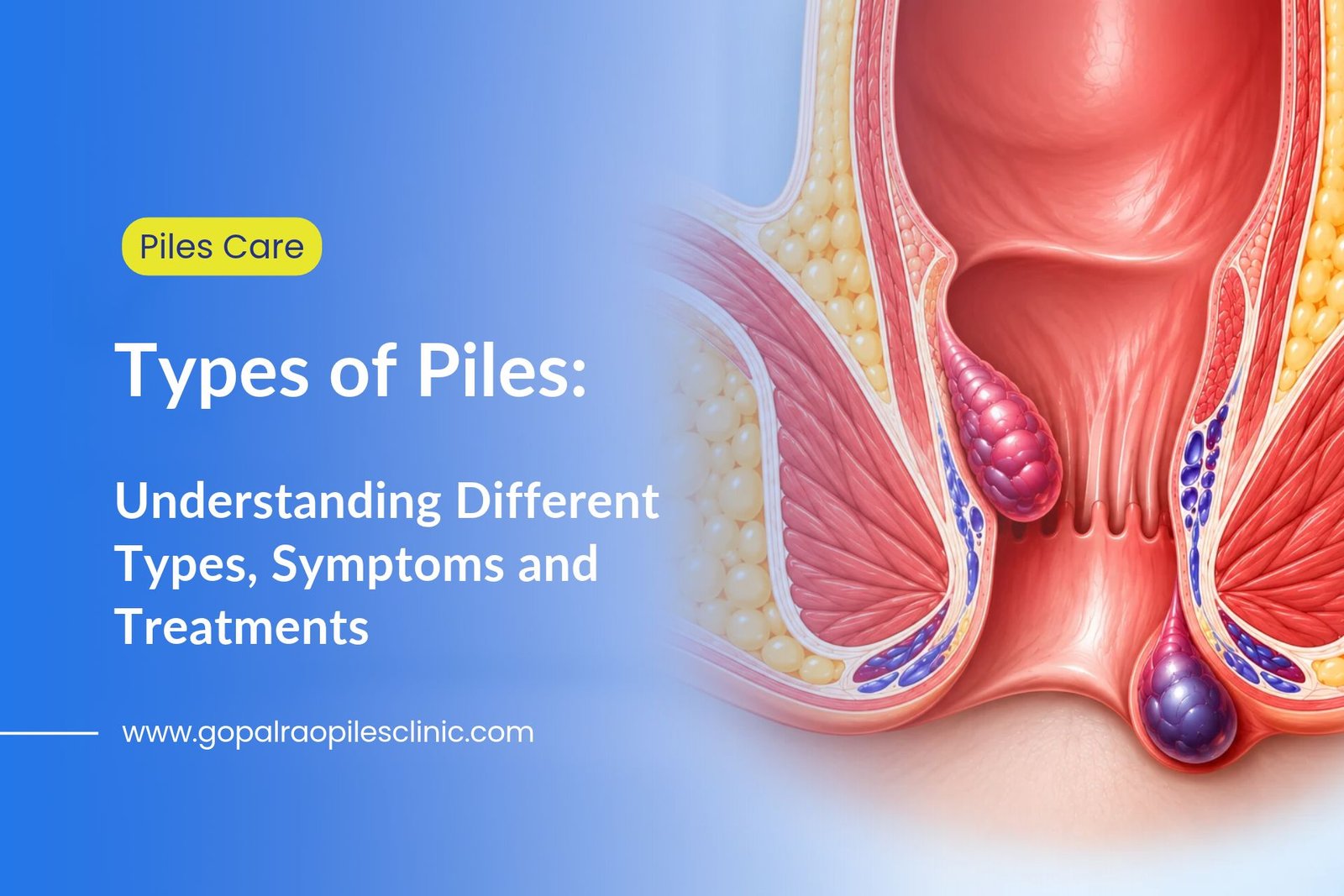
Piles, also known as haemorrhoids, are swollen blood vessels in and around the lower rectum and anus. They are common and can affect people of different ages, particularly those who experience constipation, strain during bowel movements, or spend long periods sitting.
A common misconception is that all piles are the same. In reality, piles can differ depending on where they develop and how advanced they are. Some people may notice painless bleeding, while others may experience pain, itching, swelling, or a lump around the anus. If symptoms persist, consulting a piles doctor in Mumbai can help determine the cause and the most appropriate treatment.
In this article, we will explain the different types of piles, their symptoms, grades, causes, diagnosis, treatment options, and when it is appropriate to seek medical attention.
What Are Piles?
Piles, or haemorrhoids, are swollen and enlarged blood vessels in the lower rectum or around the anus. These blood vessels are part of the normal anatomy of the area, but they can become enlarged and symptomatic when exposed to increased pressure.
Constipation and repeated straining during bowel movements are common factors. Pregnancy, prolonged sitting, low fibre intake, frequent diarrhoea, and increasing age can also contribute to the development of piles.
The symptoms can vary considerably. Some people have mild bleeding without pain, while others develop significant discomfort, swelling, or a protruding lump.
What Are the Different Types of Piles?
Piles are generally classified according to where they develop. The main types are inter nal piles and external piles. Some people may also have both types at the same time.
Internal Piles
Internal piles develop inside the rectum, above the anal canal. Because this area has fewer pain-sensitive nerves, internal piles may not cause significant pain, particularly in the early stages.
One of the most common symptoms is bright red bleeding during or after passing stool. As internal piles become more advanced, they may protrude through the anus during bowel movements. This is known as prolapse.
Some patients first notice a small amount of blood on toilet paper or in the toilet bowl. Others may feel tissue coming out while passing stool.
External Piles
External piles develop under the skin around the anus. Unlike internal piles, they can cause noticeable pain, tenderness, swelling, or irritation.
A particularly painful form of external piles can occur when a blood clot develops inside the swollen vein. This is called a thrombosed external haemorrhoid. It may appear as a tender or painful lump near the anus.
The intensity of symptoms can vary, so a painful lump should not automatically be assumed to be piles without appropriate medical assessment.
Mixed Piles
Mixed piles occur when a person has both internal and external haemorrhoids.
Because both areas are affected, symptoms can overlap. A person may experience bleeding associated with internal piles along with swelling or discomfort around the anus from external piles.
The appropriate treatment depends on the symptoms, severity, and whether the piles are internal, external, or mixed.
Grades of Internal Piles
Internal piles are commonly described using four grades. The grade helps a doctor understand how far the piles have progressed and which treatment options may be appropriate.
Grade 1 Piles
Grade 1 piles remain inside the rectum and do not protrude through the anus.
Some people may experience bright red bleeding during bowel movements. Because they remain inside, they may not cause a noticeable lump or significant pain.
Grade 2 Piles
Grade 2 piles can protrude through the anus during bowel movements or when a person strains. They usually return inside on their own after the bowel movement.
Bleeding, irritation, or a sensation of something coming out may occur.
Grade 3 Piles
Grade 3 piles protrude during bowel movements and do not return inside on their own. They may need to be gently pushed back inside manually.
People with this grade may experience recurrent prolapse, discomfort, irritation, or bleeding.
Grade 4 Piles
Grade 4 piles remain outside the anus and cannot normally be pushed back inside.
They may cause persistent discomfort and irritation and can significantly affect daily activities. Depending on the individual situation, medical or surgical treatment may be considered.
Common Symptoms of Piles
Piles can produce different symptoms depending on their location and severity. Common symptoms include:
- Bright red bleeding during or after bowel movements
- Pain or discomfort around the anus
- Itching or irritation
- Swelling
- A lump around the anus
- Mucus discharge
- Difficulty keeping the area clean
- A feeling that tissue is protruding during bowel movements
Not everyone experiences all of these symptoms. For example, someone with early internal piles may mainly notice bleeding, while a person with external or thrombosed piles may have more prominent pain.
Are Piles Always Painful?
No. Piles are not always painful.
Internal piles can cause bleeding without significant pain because of their location inside the rectum. External piles, particularly thrombosed external haemorrhoids, can be considerably more painful.
This difference is one reason why the location and type of piles matter when evaluating symptoms.
What Causes Piles?
Piles develop when increased pressure affects the blood vessels and supporting tissues around the lower rectum and anus. Several factors can contribute to this pressure.
Common risk factors include:
- Chronic constipation
- Repeated straining during bowel movements
- A diet low in fibre
- Pregnancy
- Prolonged sitting
- Heavy lifting
- Frequent diarrhoea or bowel movements
- Increasing age
Constipation deserves particular attention. Hard stools can make bowel movements difficult, which may lead to repeated straining. Over time, this can contribute to haemorrhoidal symptoms.
Improving bowel habits and preventing constipation can therefore be an important part of both managing and preventing piles.
How Are Different Types of Piles Diagnosed?
Diagnosis usually begins with a discussion about your symptoms and bowel habits. A doctor may ask about bleeding, pain, constipation, changes in bowel movements, and whether you have noticed a lump or tissue protruding from the anus.
A physical examination may then be performed. Depending on the symptoms, the doctor may examine the area around the anus and the lower rectum.
Identifying whether the piles are internal, external, or mixed, as well as determining the grade of internal piles, helps guide treatment.
Rectal bleeding should not automatically be attributed to piles. If bleeding is persistent, recurrent, significant, or accompanied by other unusual symptoms, further evaluation may be needed to identify the underlying cause.
Treatment Options for Different Types of Piles
Treatment depends on the type of piles, their severity, the symptoms they cause, and how they respond to conservative measures.
For many people with mild symptoms, improving bowel habits and making lifestyle changes may be enough. More advanced or persistent piles may require a procedure or surgery.
Lifestyle and Home Measures
Simple measures can help reduce symptoms and prevent constipation.
These include:
- Increasing fibre in the diet
- Drinking adequate fluids
- Avoiding excessive straining
- Avoiding prolonged sitting on the toilet
- Staying physically active
- Keeping the anal area clean
- Managing constipation early
Fibre can help make stools softer and easier to pass. Regular physical activity can also support healthy bowel habits.
Medicines and Conservative Treatment
Depending on the symptoms, a doctor may recommend medicines or topical treatments to provide short-term relief from discomfort, itching, or irritation.
The appropriate medicine depends on the individual’s symptoms and medical history. Persistent symptoms should not be managed with self-medication indefinitely, particularly when bleeding is present.
If symptoms continue despite conservative measures, a medical assessment can help determine whether another form of treatment is needed.
Non-Surgical Procedures
Some internal piles, particularly those that do not respond adequately to conservative treatment, may be treated with minimally invasive procedures.
Depending on the individual case, these may include:
- Rubber band ligation: A small band is placed around the base of an internal haemorrhoid to reduce its blood supply.
- Sclerotherapy: A solution is injected into the haemorrhoidal tissue to help reduce it.
- Infrared coagulation: Heat is used to help shrink the affected tissue.
Not every procedure is suitable for every type or grade of piles. A doctor will recommend an option based on the individual’s condition.
Surgical Treatment
Surgery may be considered when piles are advanced, recurrent, significantly symptomatic, or do not respond adequately to other treatments.
One commonly used surgical procedure is haemorrhoidectomy, which involves removing the problematic haemorrhoidal tissue.
Other surgical or procedure-based approaches may also be appropriate depending on the type and severity of the piles.
If you are researching piles treatment in Mumbai, it is useful to focus not only on the treatment name but also on whether the doctor has assessed the type and grade of your piles. The right treatment is individualised rather than being the same for every patient.
When Should You See a Doctor for Piles?
Mild piles may improve with changes in diet, bowel habits, and lifestyle. However, medical evaluation is advisable when symptoms persist, recur, or become more severe.
You should consider seeing a doctor if you experience:
- Persistent or recurrent rectal bleeding
- Severe or worsening pain
- A painful lump around the anus
- Piles that do not improve with basic measures
- Significant or unexplained bleeding
- Symptoms that interfere with daily activities
Rectal bleeding should not automatically be assumed to be caused by piles. Several conditions can cause bleeding, so new or unexplained bleeding deserves appropriate medical evaluation.
If you are searching online for a piles clinic near me, choose a clinic where your symptoms can be properly evaluated rather than relying only on home remedies or assuming that every anal symptom is caused by piles.
Can Piles Be Prevented?
Piles cannot always be prevented, but healthy bowel habits can reduce the risk of developing symptoms or having them return.
Helpful measures include:
- Eat enough fibre through fruits, vegetables, whole grains, and other fibre-rich foods.
- Drink adequate fluids throughout the day.
- Avoid straining while passing stool.
- Do not ignore the urge to have a bowel movement.
- Exercise regularly.
- Avoid spending long periods sitting on the toilet.
- Manage constipation early.
- Maintain healthy bowel habits consistently.
Small changes can make a meaningful difference, particularly for people who frequently experience constipation or strain during bowel movements.
Frequently Asked Questions About Types of Piles
What are the main types of piles?
The main types are internal piles and external piles. Internal piles develop inside the rectum, while external piles develop under the skin around the anus. Some people can have both, which are referred to as mixed piles.
Which type of piles causes bleeding?
Internal piles commonly cause bright red bleeding during or after bowel movements. However, rectal bleeding can have several causes, so persistent or unexplained bleeding should be evaluated by a doctor.
Which type of piles is more painful?
External piles are generally more likely to cause pain, particularly when a blood clot develops inside the haemorrhoid. Internal piles may cause bleeding without significant pain, especially in the earlier grades.
Can piles go away without treatment?
Mild piles may improve with measures such as increasing dietary fibre, drinking enough fluids, avoiding straining, and managing constipation. Persistent or advanced piles may require medical treatment.
When do piles require surgery?
Surgery may be considered when piles are advanced, persistent, recurrent, or causing significant symptoms despite other treatments. The decision depends on the type, grade, and individual symptoms.
Key Takeaways
Piles are swollen blood vessels around the anus and lower rectum, but they are not all the same.
- Internal piles develop inside the rectum and may cause bleeding or prolapse.
- External piles develop around the anus and may cause pain, swelling, and tenderness.
- Mixed piles involve both internal and external haemorrhoids.
- Internal piles are classified into four grades based on their degree of prolapse.
- Constipation and repeated straining are common contributing factors.
- Treatment ranges from lifestyle changes and medicines to non-surgical procedures and surgery.
- Persistent bleeding, severe pain, or unusual symptoms should be medically evaluated.
- The most appropriate treatment depends on the type and severity of the piles.
Understanding the type of piles you have is the first step toward choosing appropriate treatment and preventing recurrent symptoms. If symptoms continue despite lifestyle measures, speaking with a qualified doctor can help you determine the next step.